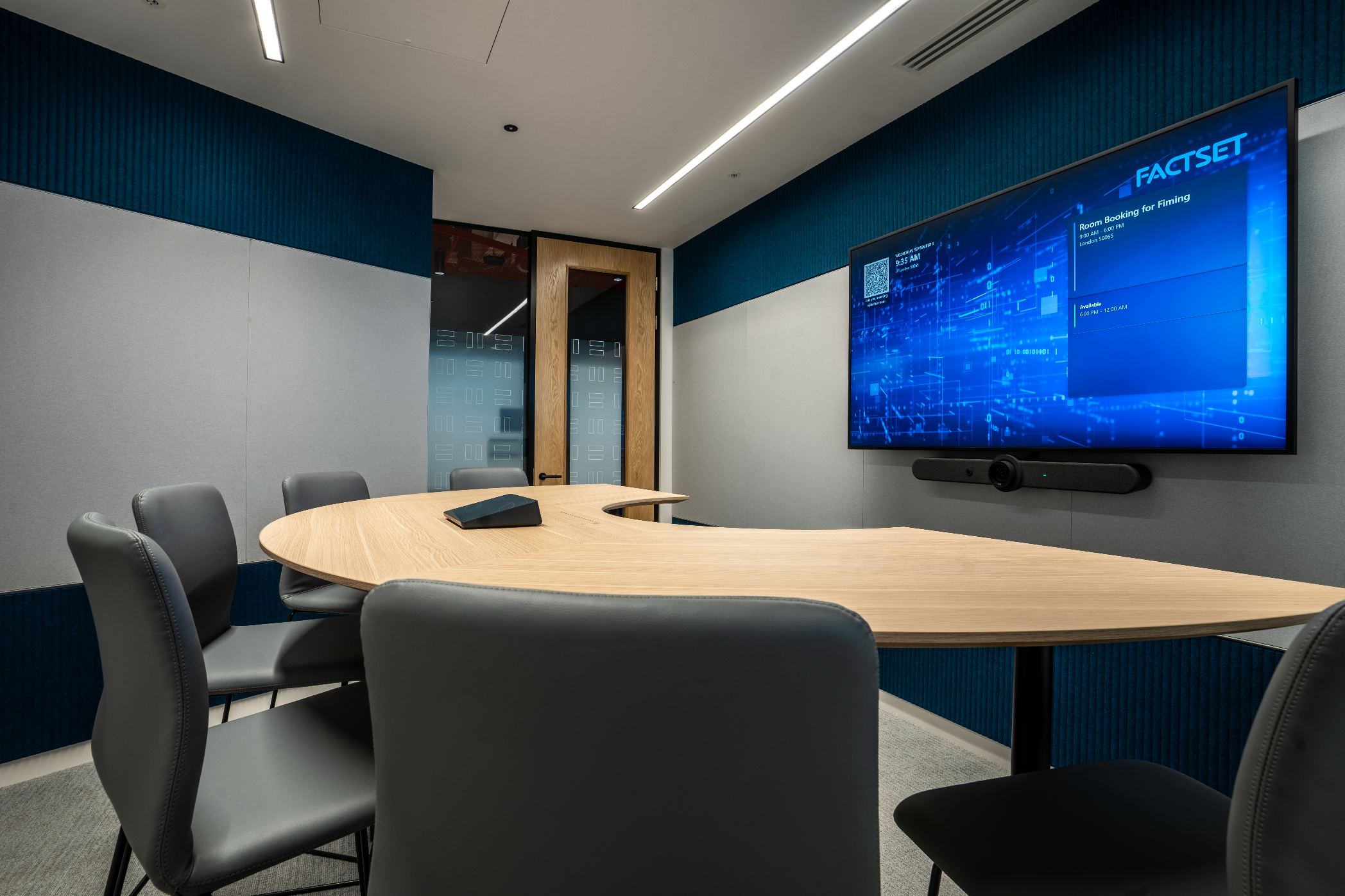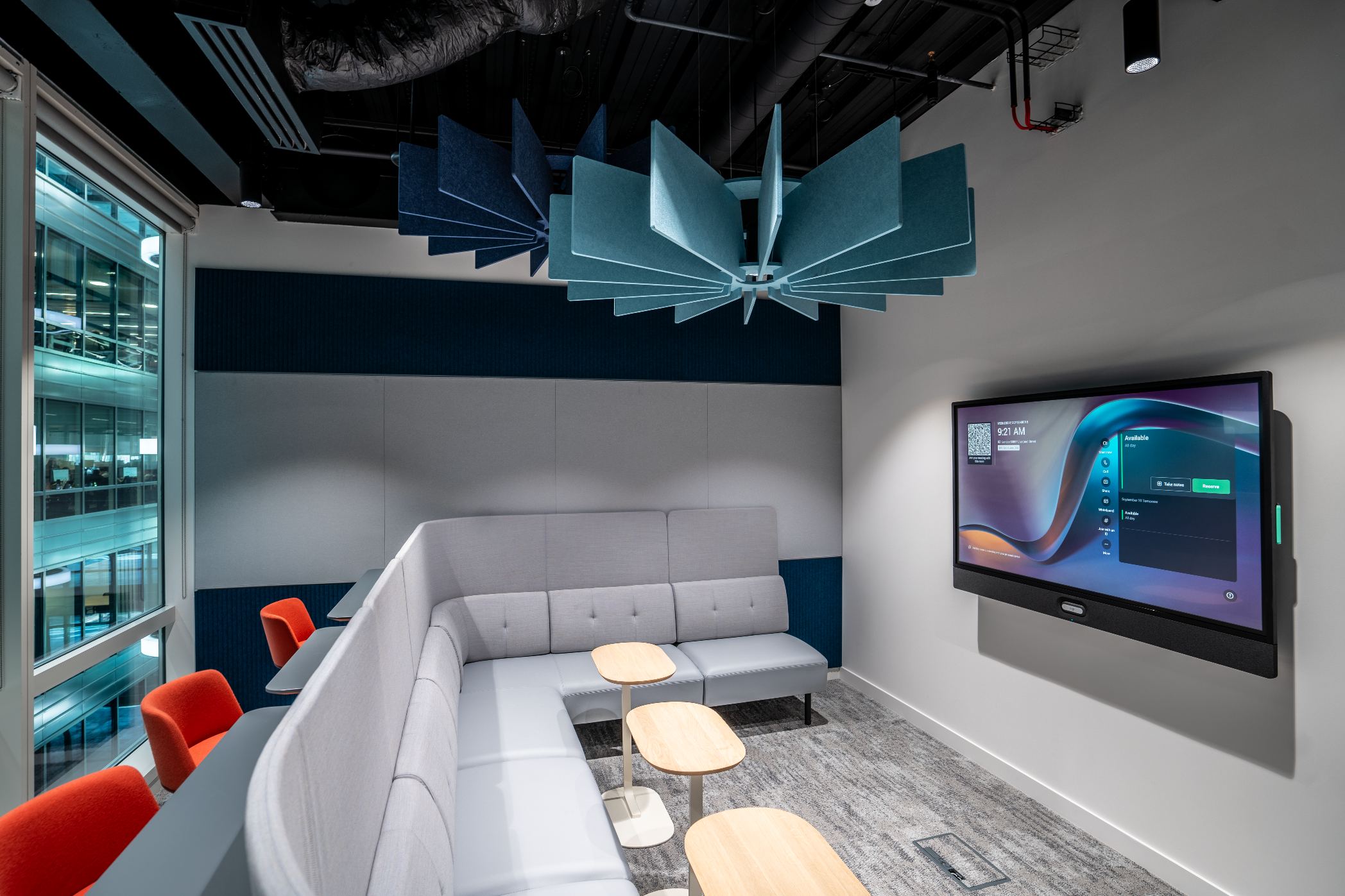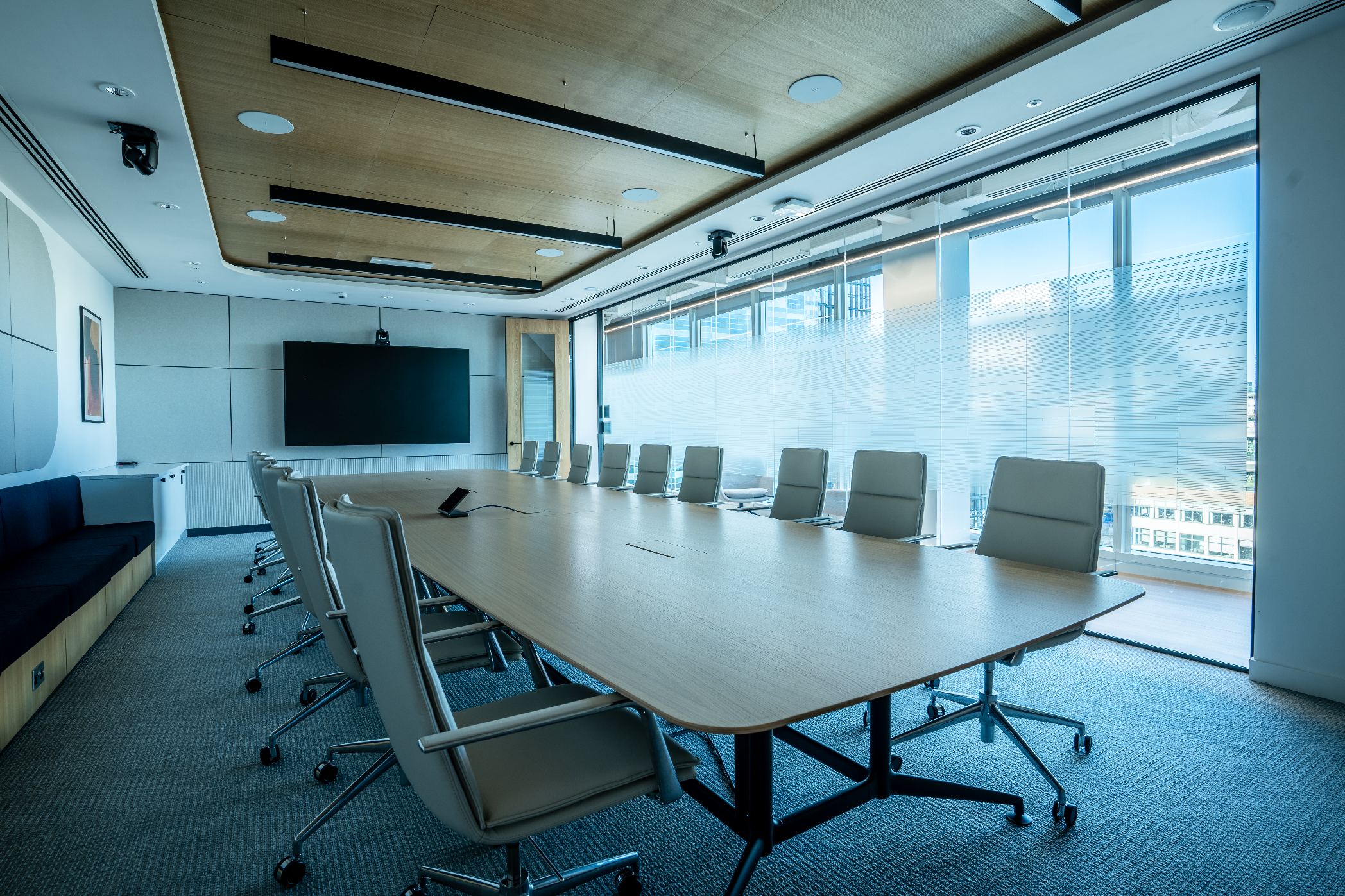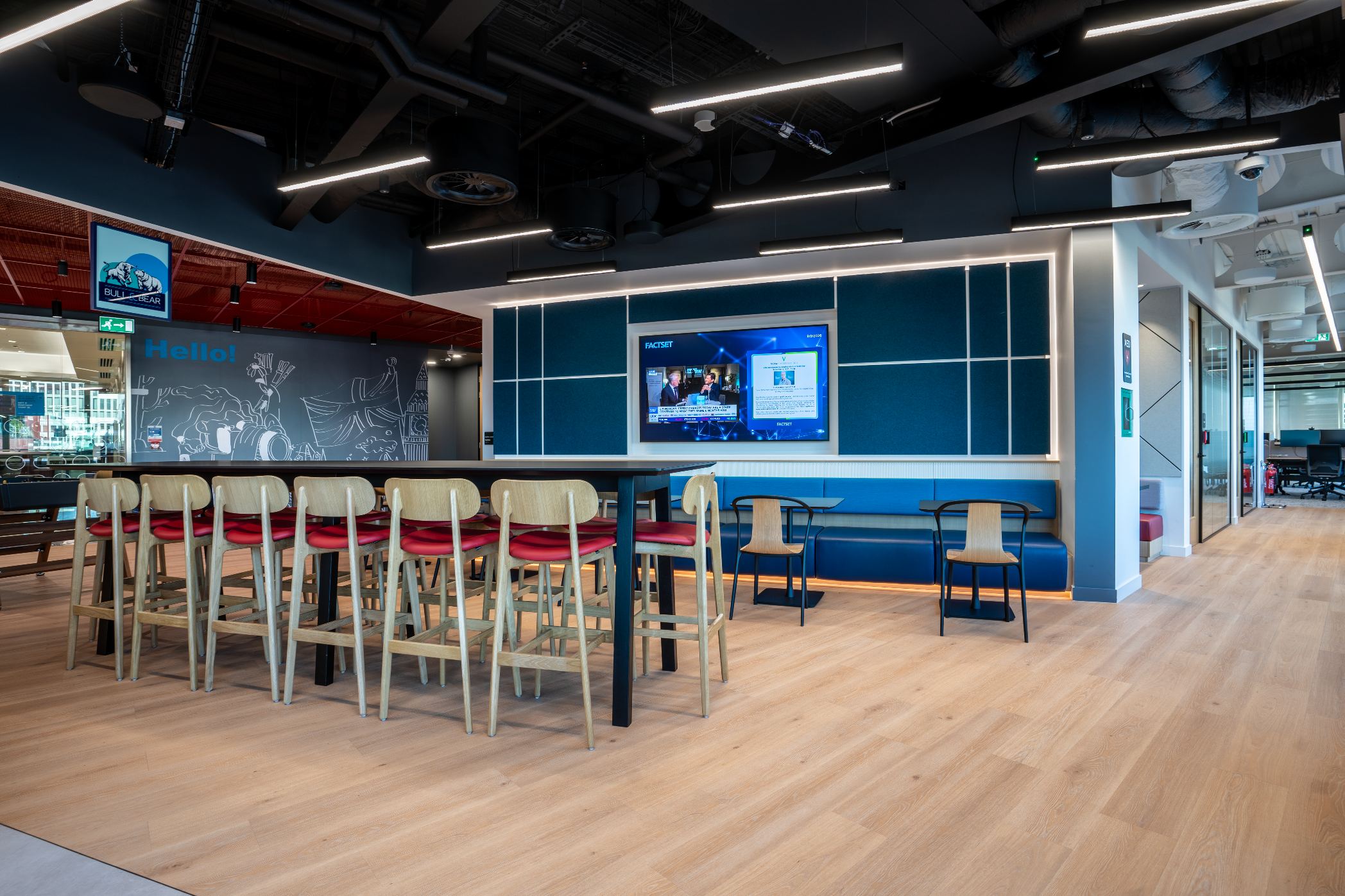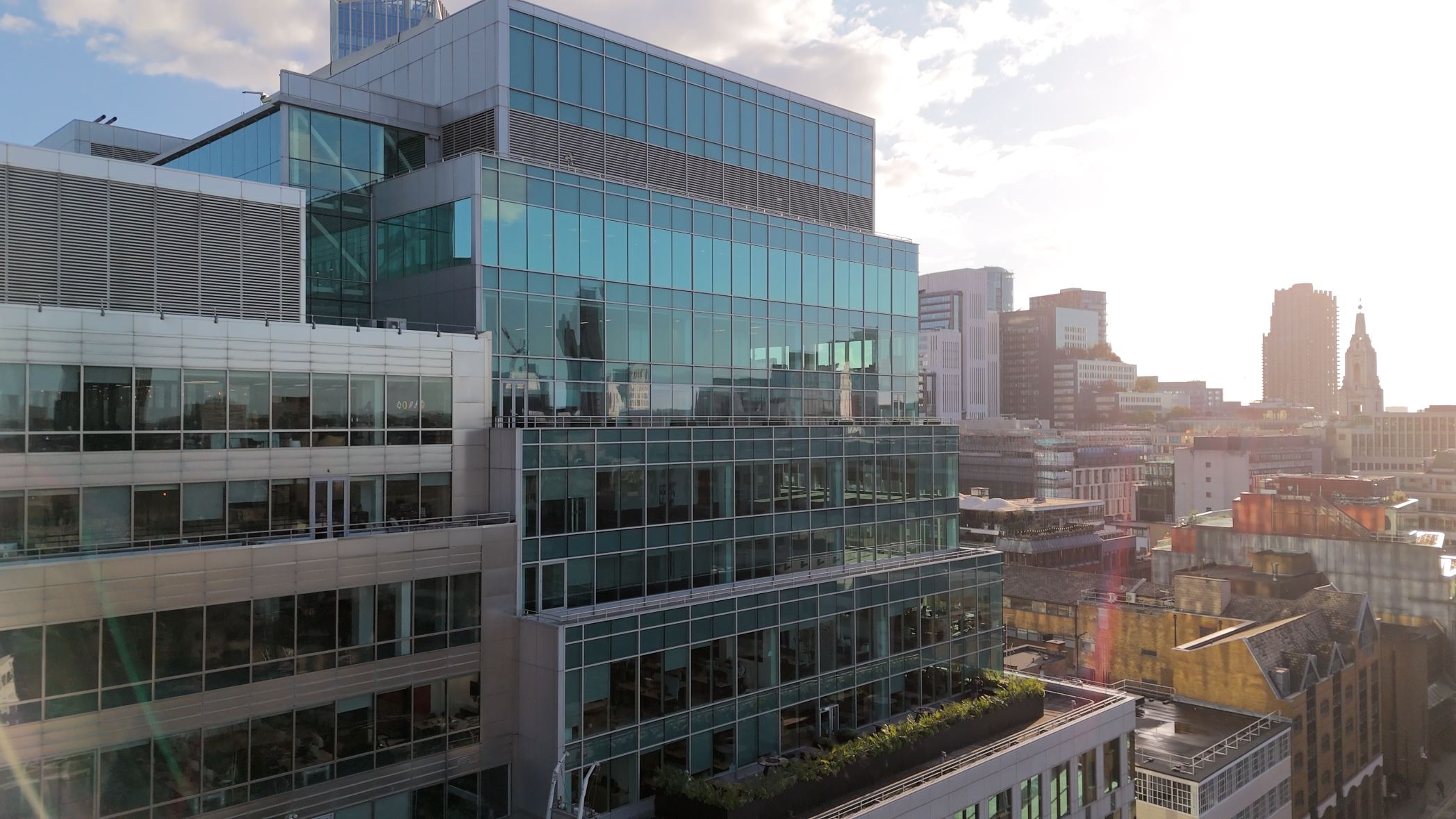
FactSet is an international technology company operating in the financial data and analytics sector, serving institutional clients across multiple markets. As part of an international programme, SLX and its partners within the PSNI Global Alliance developed an AV systems deployment model that combines common standards with the flexibility to adapt them to the technical, building-related and organisational conditions of individual offices.
One AV Standard, Different Local Requirements
Each FactSet location differs in scale, spatial layout and technical requirements. Local regulations, building infrastructure, the availability of specific equipment and installation practices also vary.
The challenge was therefore to develop a standard that would be:
- consistent for users across all offices,
- scalable as the organisation grows,
- flexible enough to be adapted to the conditions of each individual location.
The solution also had to integrate with FactSet’s global IT infrastructure, meet security requirements and enable efficient management of the entire environment.
A Global Model, Local Responsibility
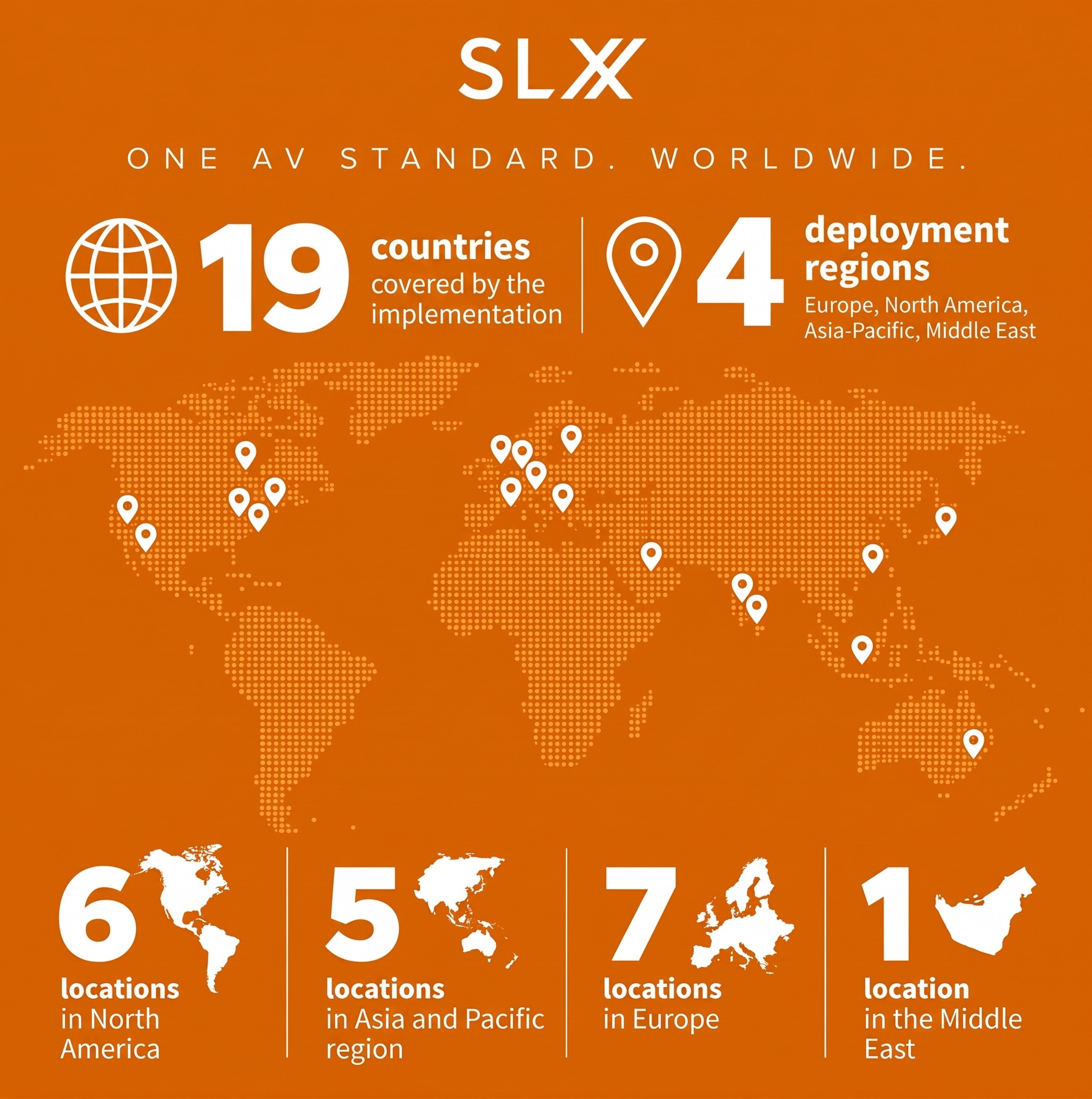
The programme covered 19 countries worldwide, including offices in New York, San Francisco and Toronto, through London, Paris, Amsterdam and Dubai, to Tokyo, Hong Kong and Sydney.
At SLX, we were responsible for designing and coordinating the AV environment, while in Europe we were also directly responsible for implementing the systems. In other regions, the work was carried out by regional and local integrators belonging to the PSNI network.
| Area of Responsibility | Delivery Model |
| Global standard and solution architecture | SLX in cooperation with FactSet |
| Deployment coordination | SLX, including coordination of activities across EMEA, APAC and MENA |
| Europe | Implementation carried out by SLX |
| Americas | Verrex – a PSNI partner, together with regional partners |
| APAC, MENA and other local markets | Local integrators – Totsu, Online Instruments, China Tech, SKK Technologies and GranteQ, PSNI partners operating under SLX coordination |
This approach made it possible to draw on the expertise of local teams while ensuring that individual deployments remained aligned with the FactSet model.
“What mattered most to me was having a partner we could trust, one that understood what we needed in each space. In a project delivered across multiple regions, predictability is also crucial – knowing what to expect regardless of location.”
Alastair Bowen-Jones, Enterprise Platform, FactSet
Global model, local accountability
The program covered 19 countries worldwide, including offices in New York, San Francisco, and Toronto, through London, Paris, Amsterdam, and Dubai, all the way to Tokyo, Hong Kong, and Sydney.
The execution was based on centrally defined guidelines and the experience of teams operating in individual markets.
How Was FactSet’s AV Standard Developed?
“Our goal was not simply to deliver audiovisual systems, but to create a global standard that provides users with a consistent experience in every office – regardless of location.” – Radosław Brzuska, Commercial Manager, SLX.
The starting point was not equipment selection, but how FactSet teams use their different spaces. On this basis, we worked with the client to define room functions, system control methods and quality requirements.
These agreements covered both the solution architecture and the principles to be followed during every deployment.
Each new location required the audiovisual environment to be integrated with the existing IT infrastructure, network, room booking systems and the organisation’s security measures. Throughout this process, we ensured that solutions adapted to local conditions remained consistent with the principles of the overall programme.
We also coordinated cooperation with regional integrators. This allowed us to benefit from their knowledge of individual markets without departing from the common principles.
London – A Global Standard Adapted to Local Needs
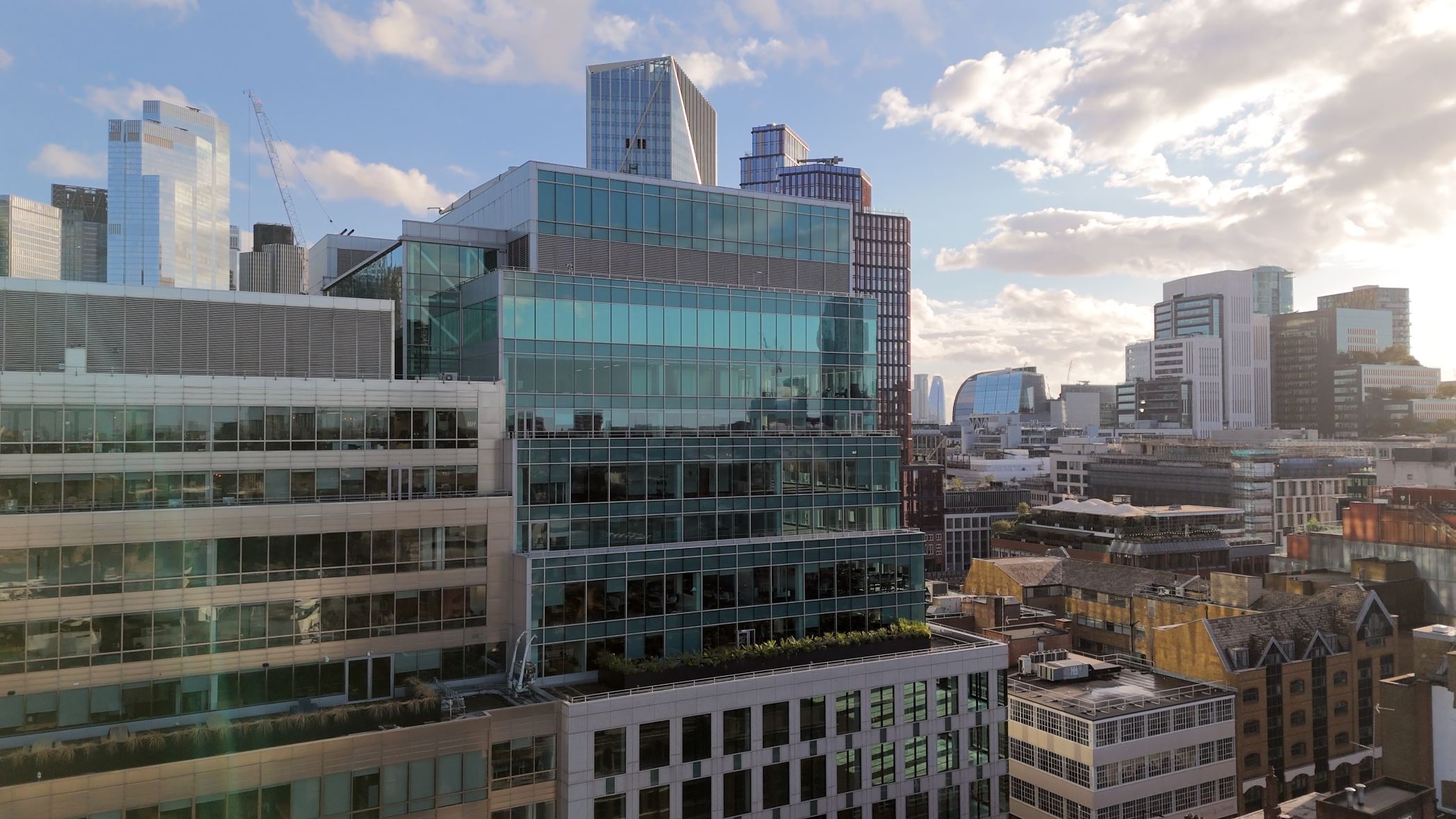
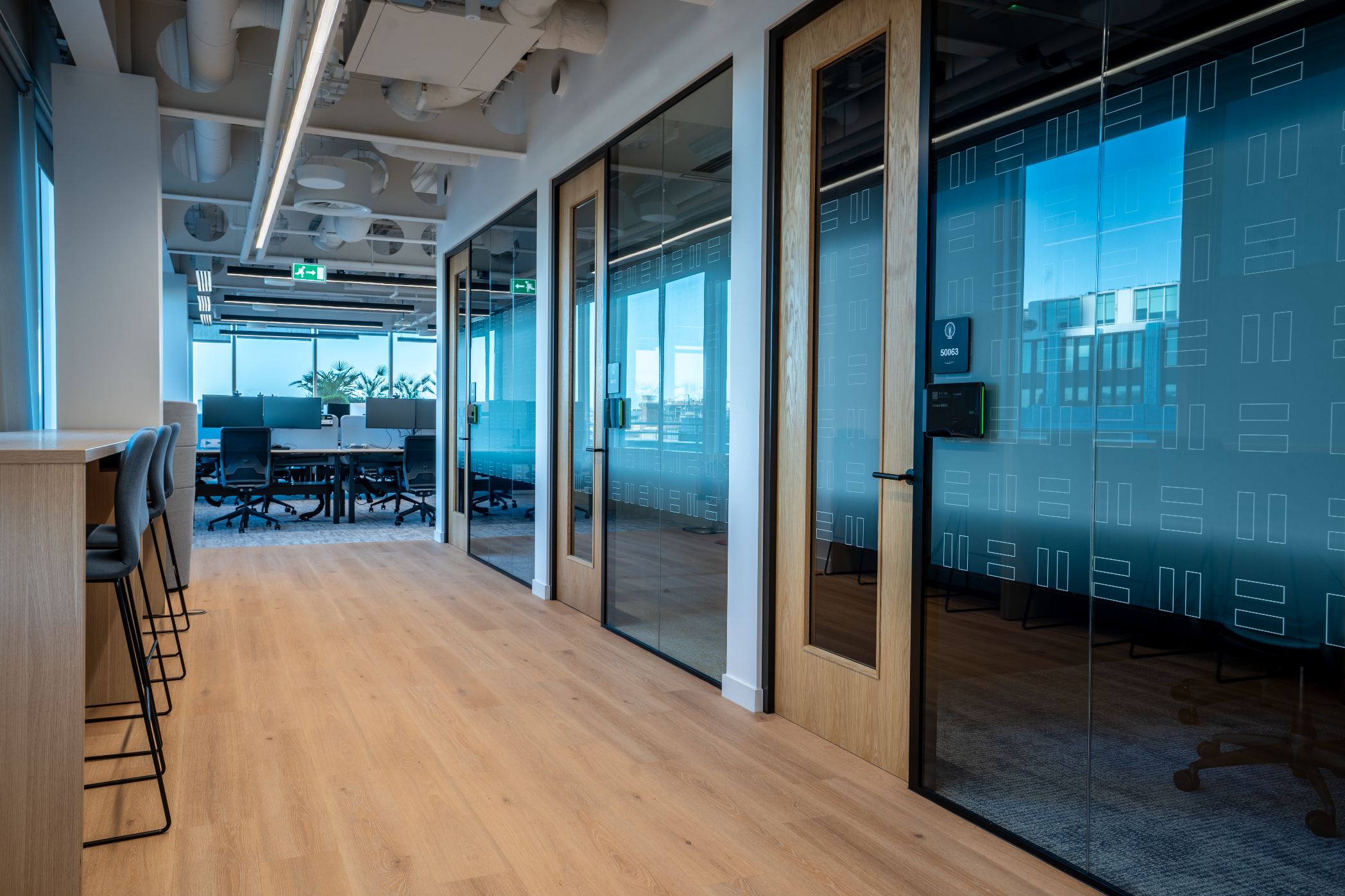
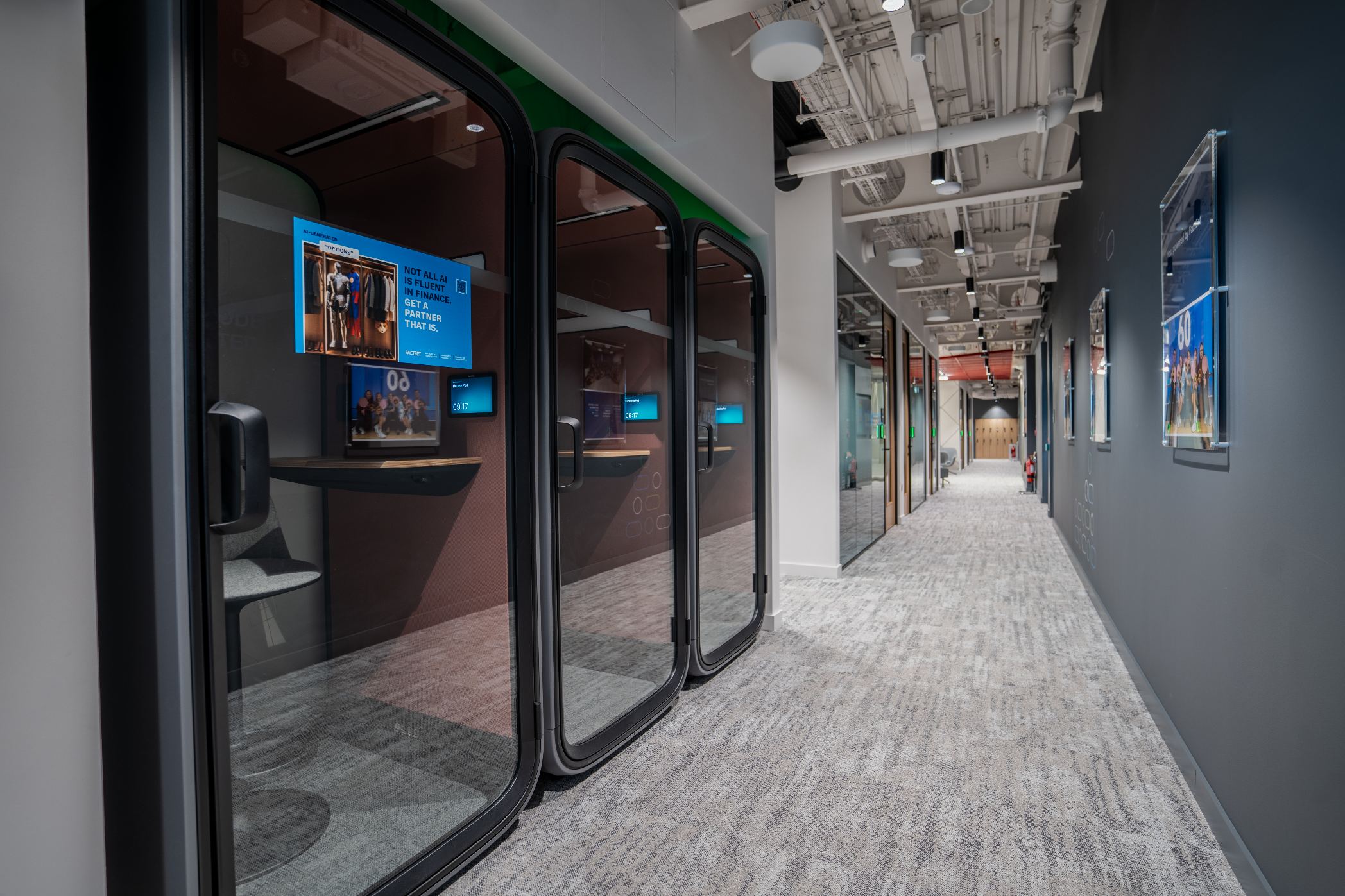
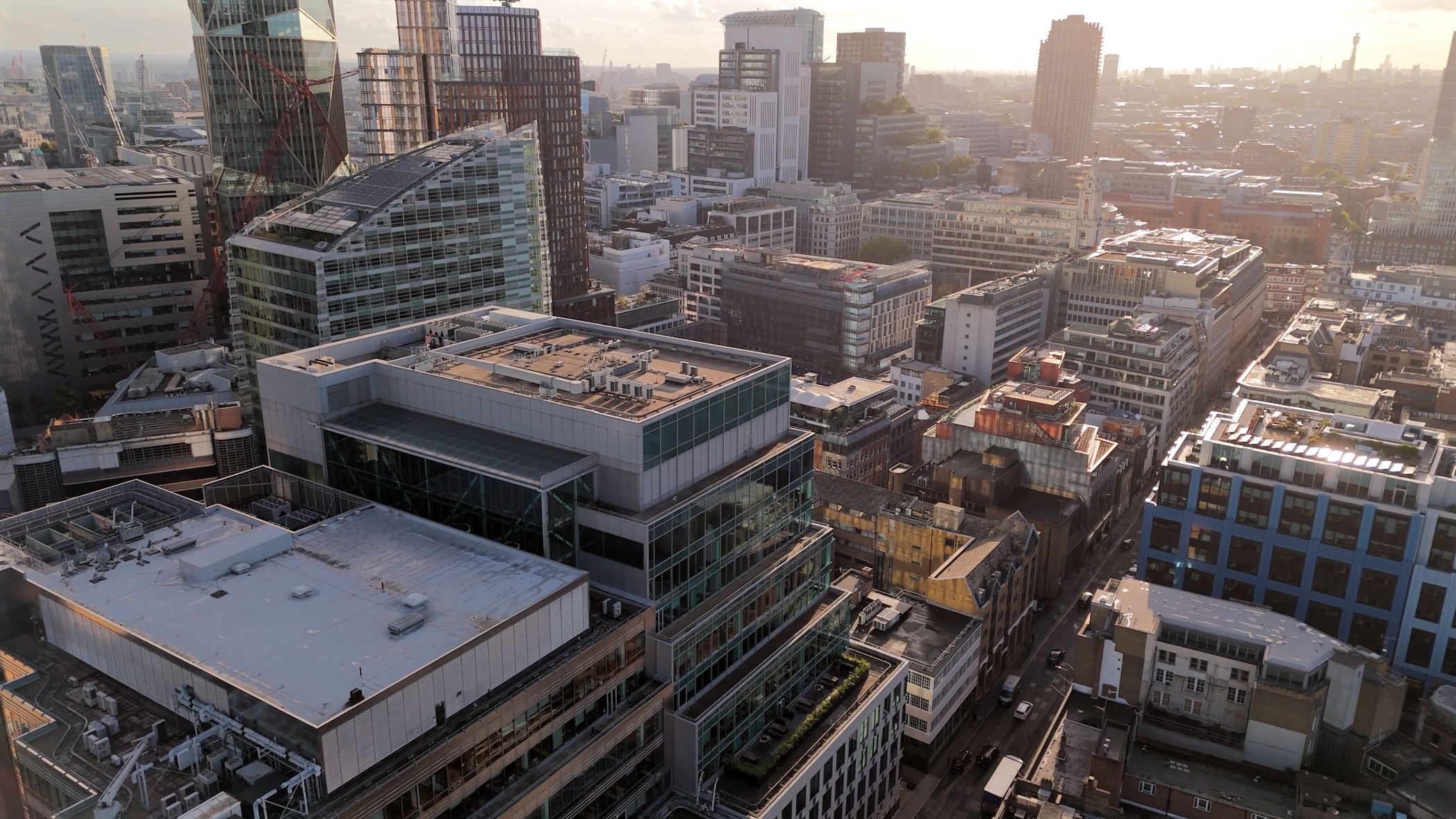
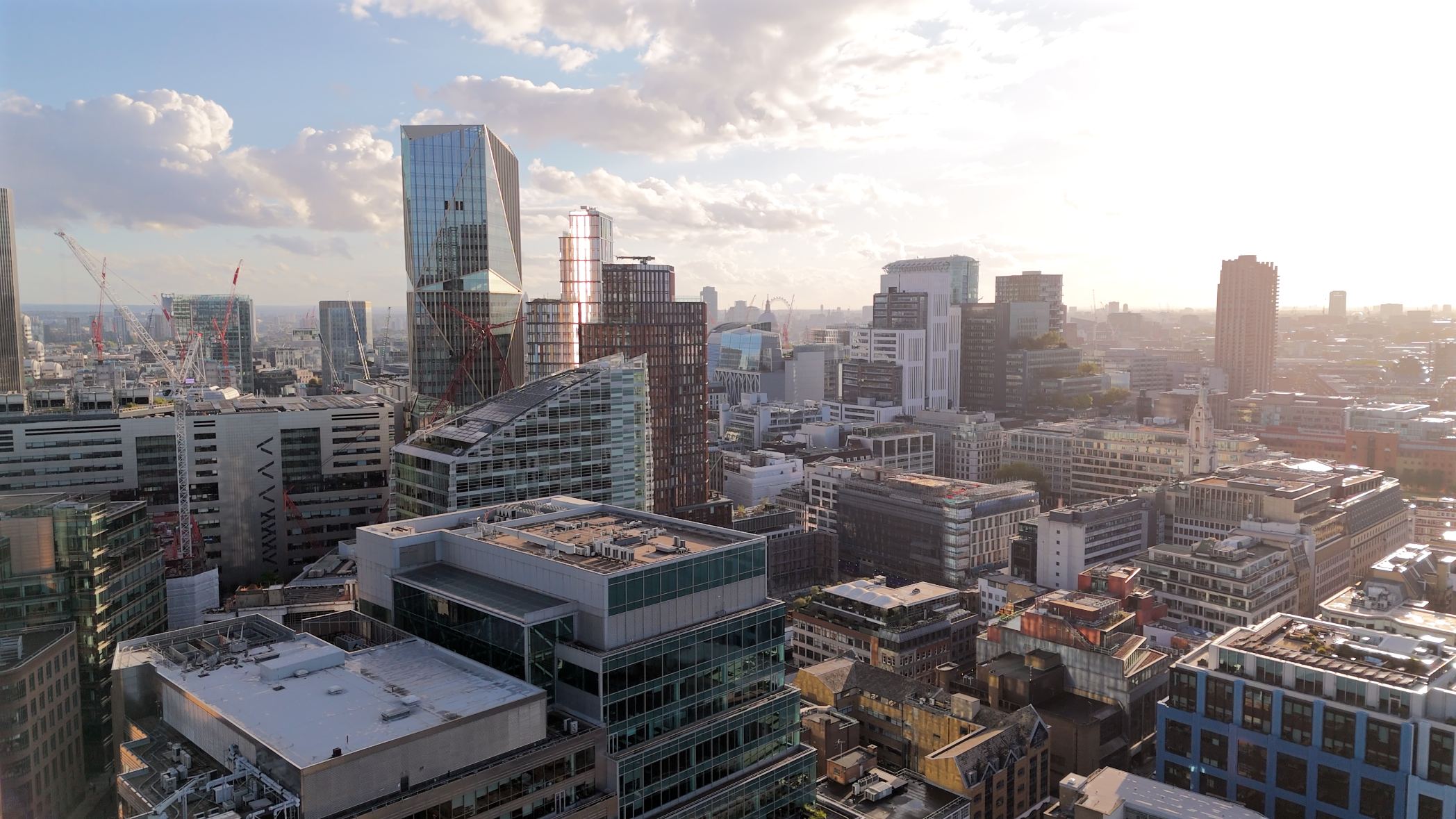
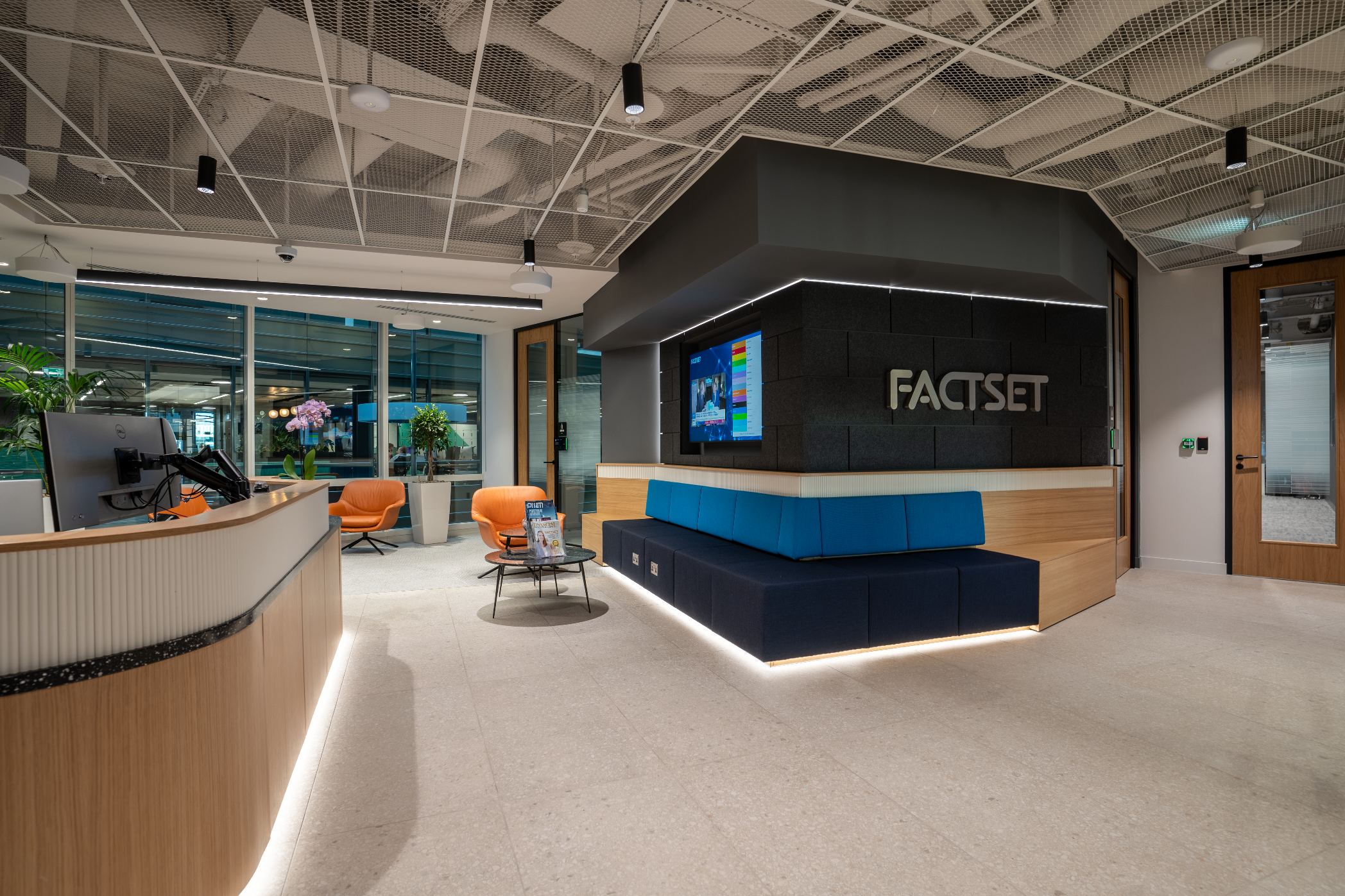
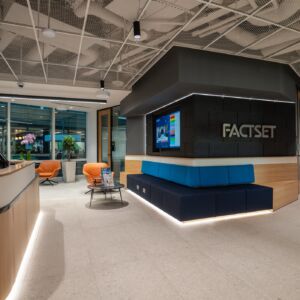
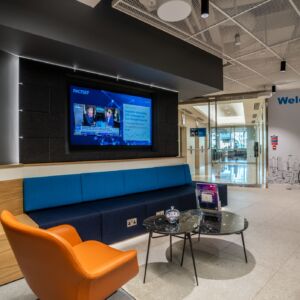
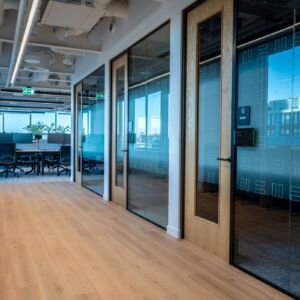
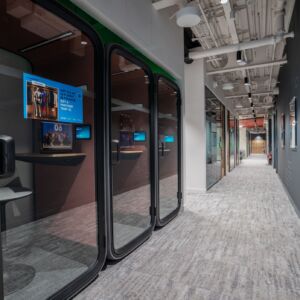
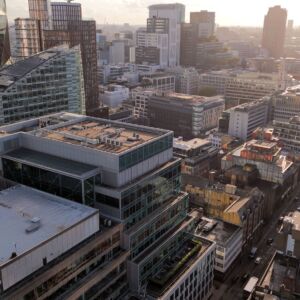
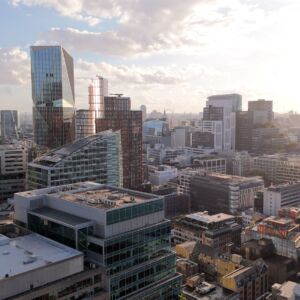
One of the most important examples of the adopted model in practice is FactSet’s London office. The project was divided into two phases and covered two floors of the building.
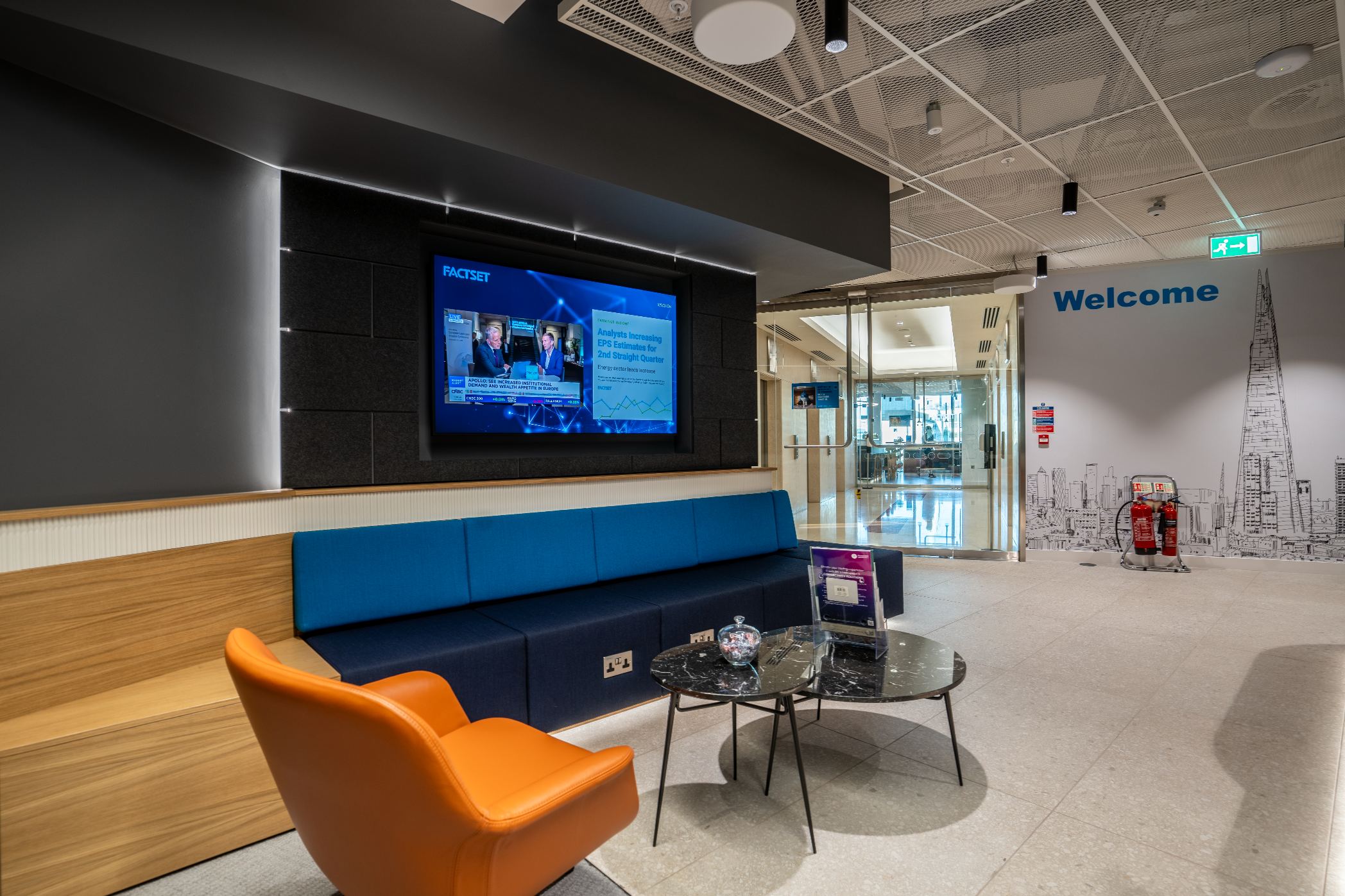
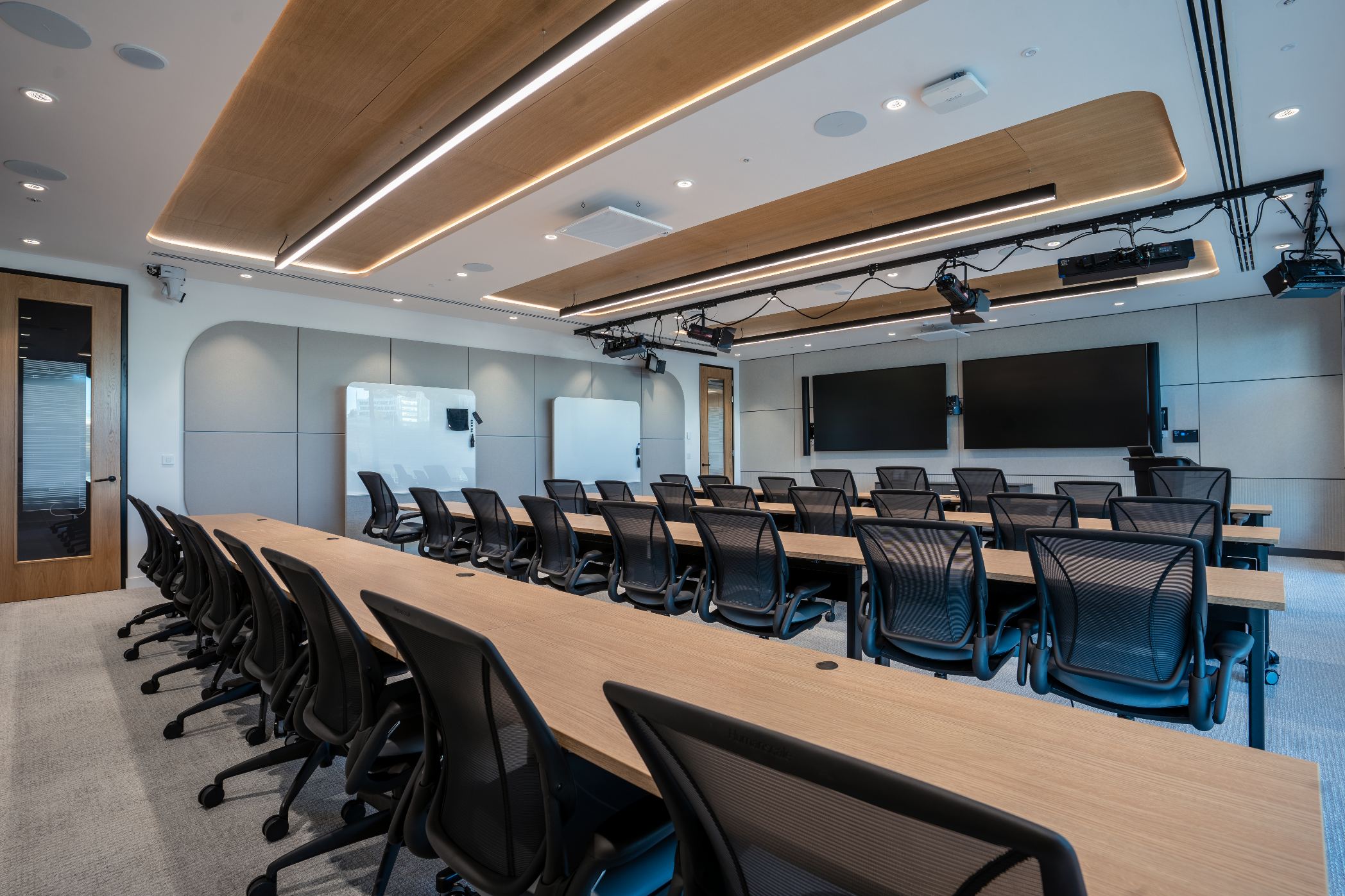
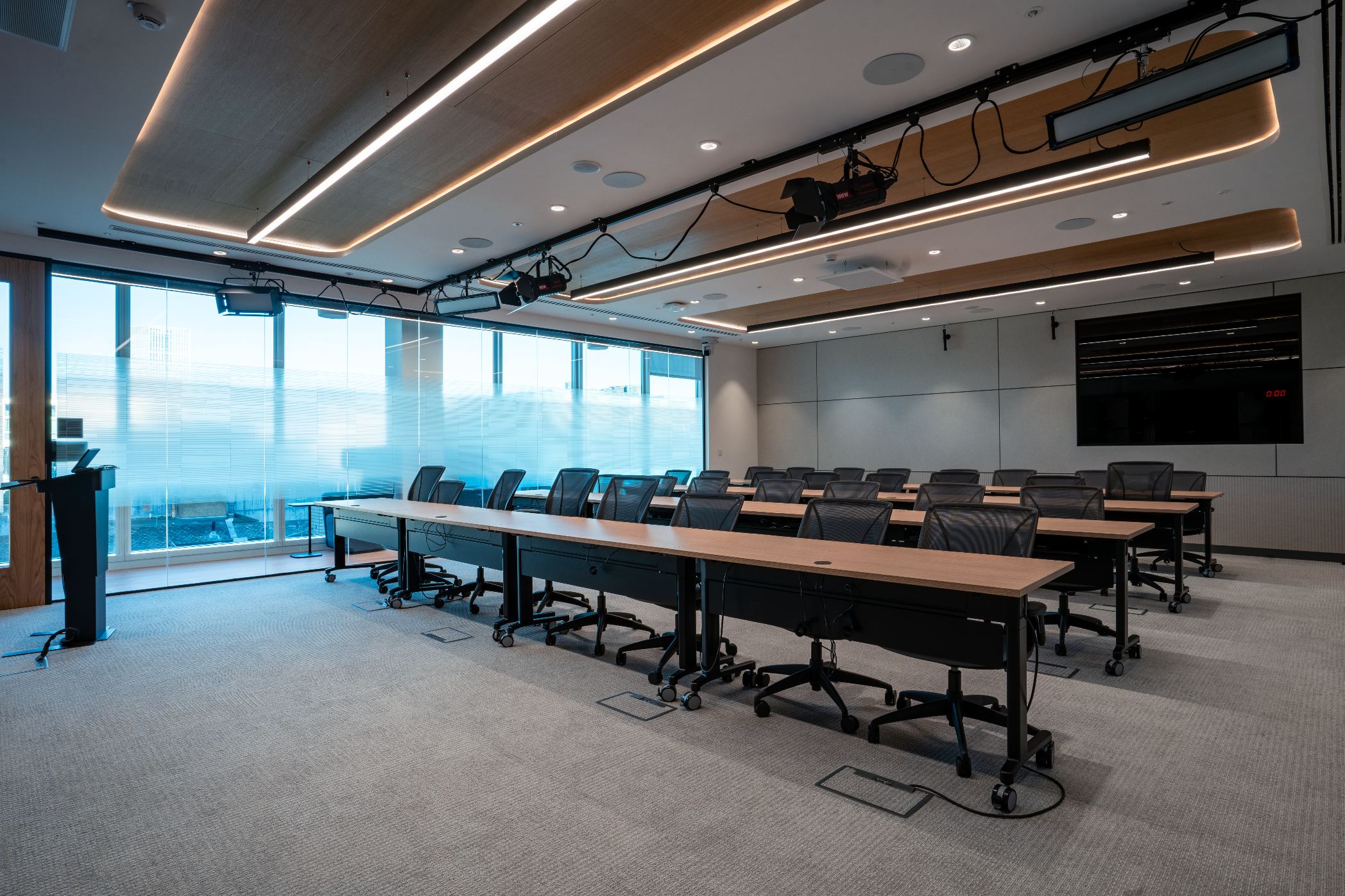
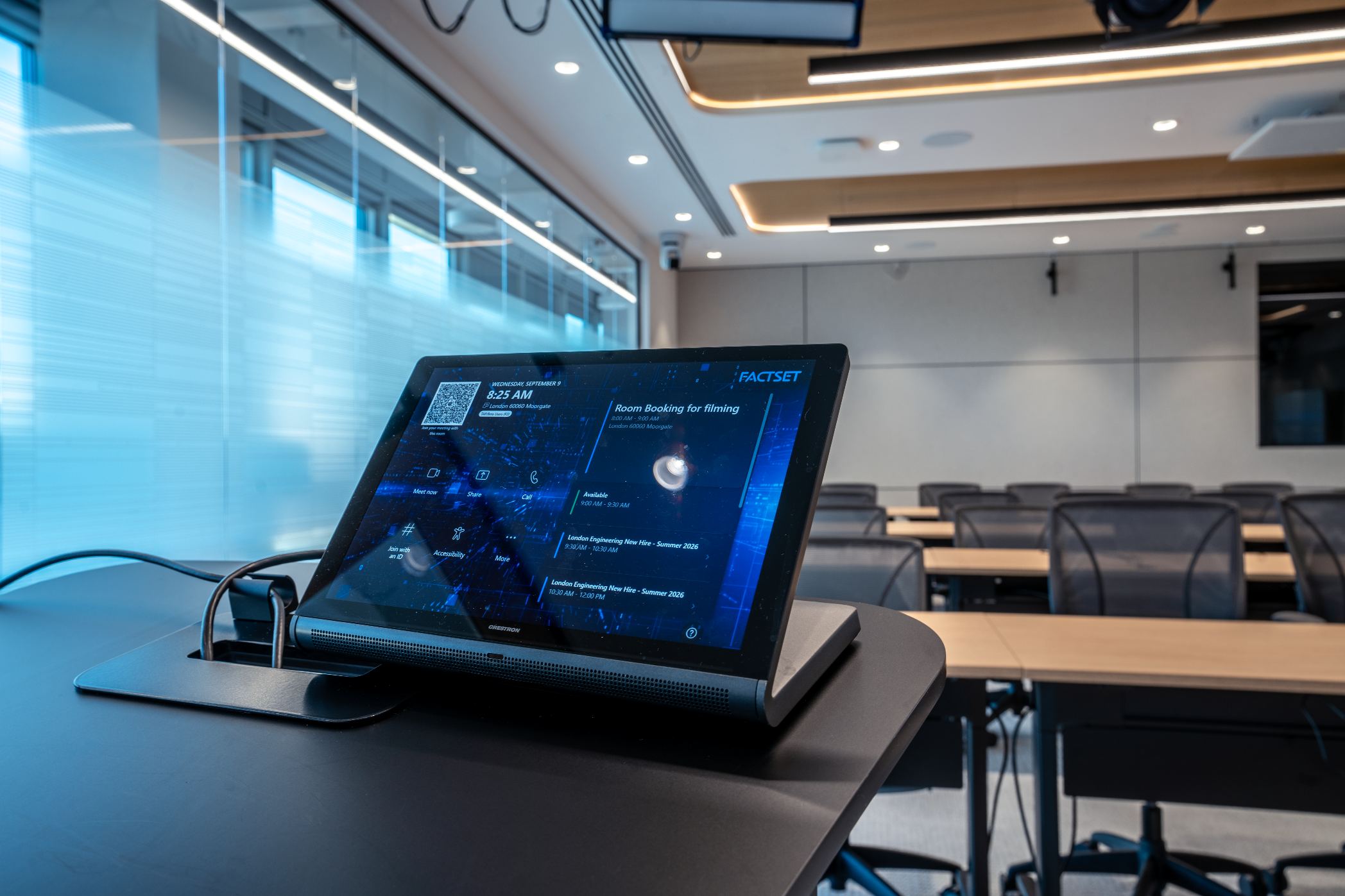
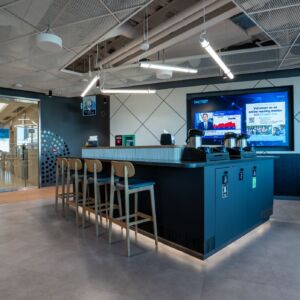
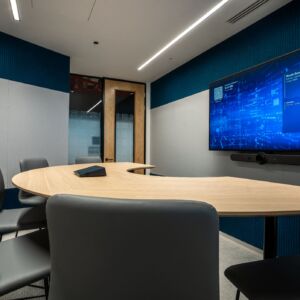
The project scope went beyond standard meeting room equipment. The AV environment was designed to support everyday team meetings, hybrid working, training, board meetings, room bookings, content production and internal communications.
| Scope | Phase 1 | Phase 2 |
| Flex rooms | 13 | 18 |
| Meeting rooms | 4 | 4 |
| Ideation rooms | 1 | 1 |
| Room booking systems | 22 | 23 |
| Sound masking | Entire floor | Entire floor |
| Specialist spaces | Boardroom, training room with control room, studio/green room, digital signage | Extension of the standard to the next floor |
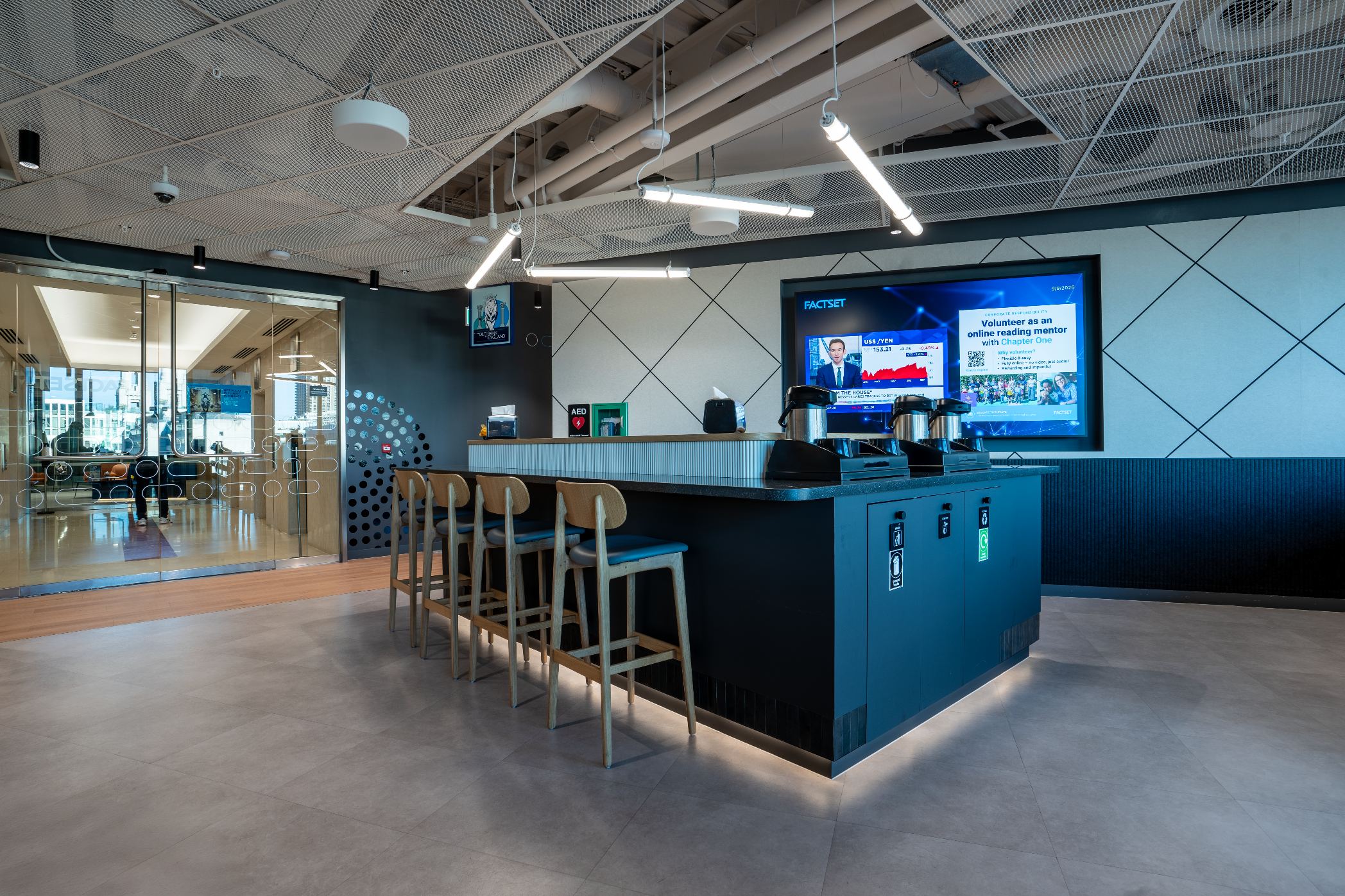
The project also included technical spaces and shared areas. The scope was extensive, yet from the user’s perspective, ease of use and predictable operation remained the most important priorities. Behind that simplicity, however, lay considerable design complexity..
“On a project of this scale, effective collaboration with the client is not an optional extra, but one of the conditions for success. A complex AV environment, connected to infrastructure, security and the organisation’s global standards, requires a high level of project understanding and rapid decision-making on both sides. In the case of FactSet, high expectations were matched by commitment, responsiveness and shared responsibility for the outcome.”
Patryk Ćwikowski, Project Coordinator,SLX
Different Rooms, the Same Operating Logic
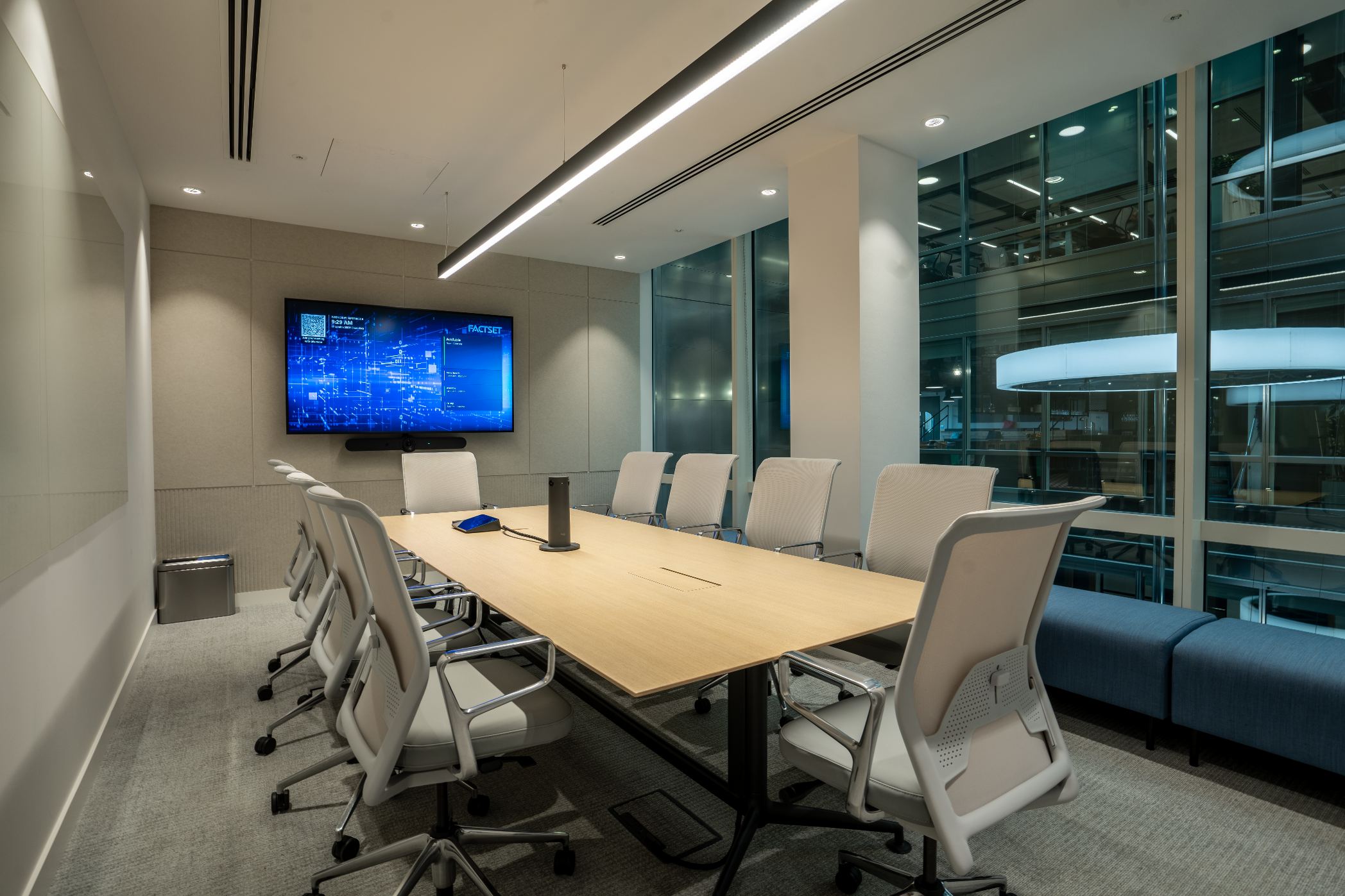
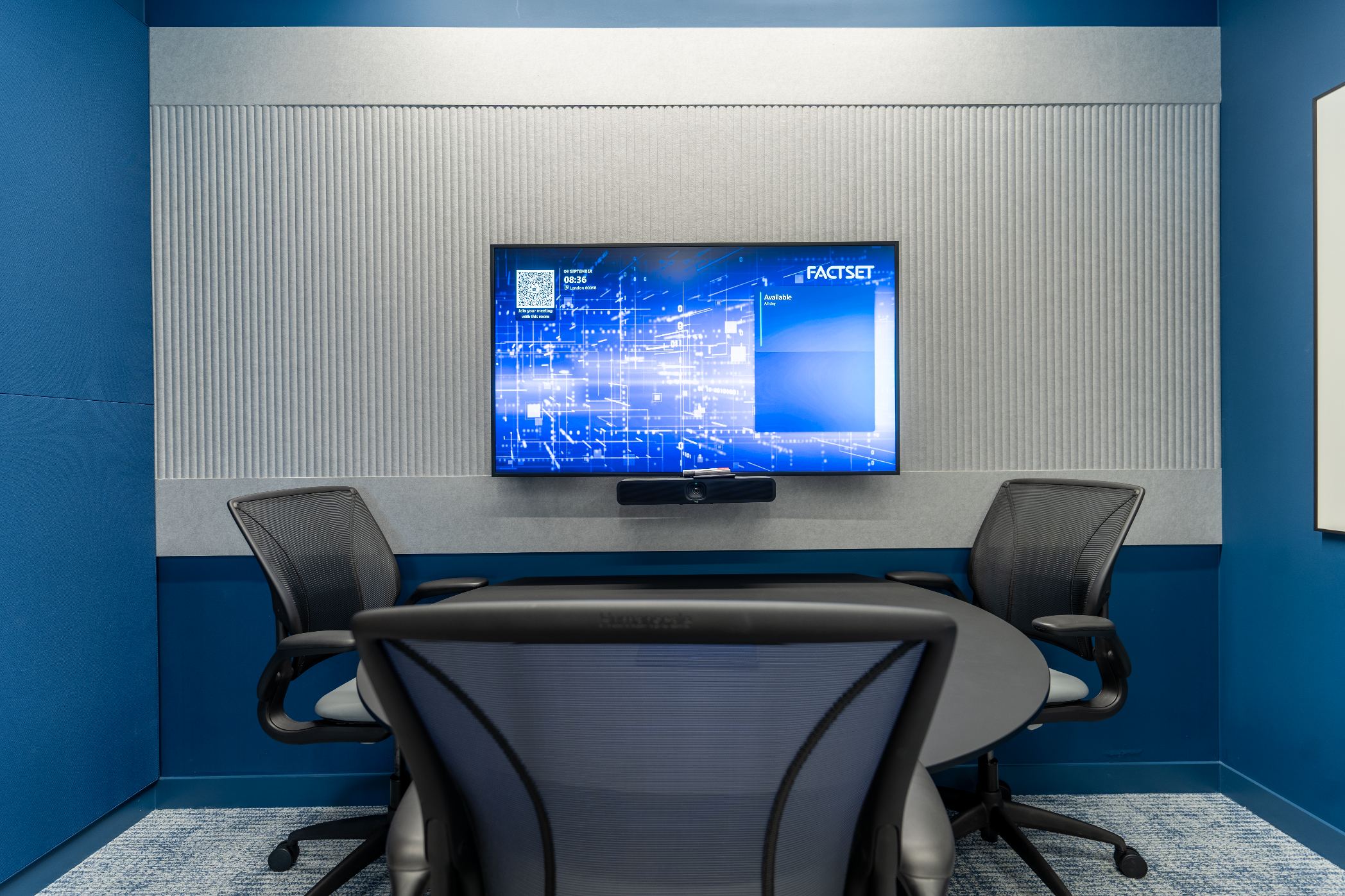
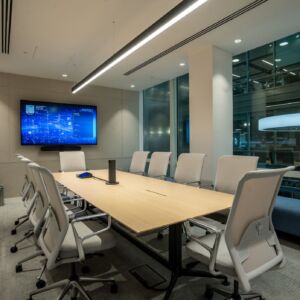
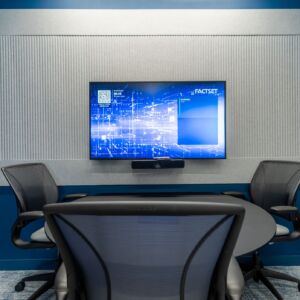
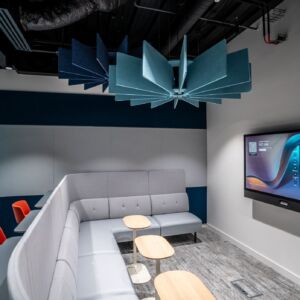
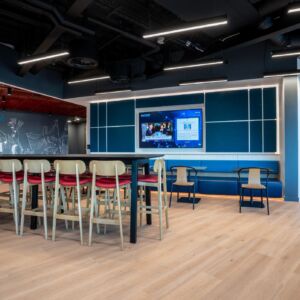
The London office includes many types of spaces – from smaller flex rooms to the boardroom and training facilities. Each serves a different purpose, but from an audiovisual perspective, we designed them all according to the same operating logic.
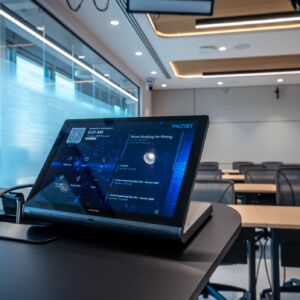
Users should not have to think about which system is installed in a particular room or learn how to operate it from scratch. . The solutions must provide a similar experience when starting meetings, sharing content and conducting video conferences, regardless of the type of room..
This allows the technology to remain in the background, enabling employees to focus on their meetings and collaboration.
Comfort and Confidentiality in an Open-Plan Office
We implemented a sound masking system on both floors. Its purpose is to create a more uniform acoustic background in office spaces.
The system improves acoustic comfort and speech privacy by reducing the distracting impact of conversations and the perceived presence of certain background sounds, including external noise, building services and air conditioning.
This is particularly important in an organisation operating in the financial sector, where conversations often involve confidential data, clients and market analysis.
Spaces for Meetings, Training and Production
In the London office, we also implemented solutions designed for more advanced applications.
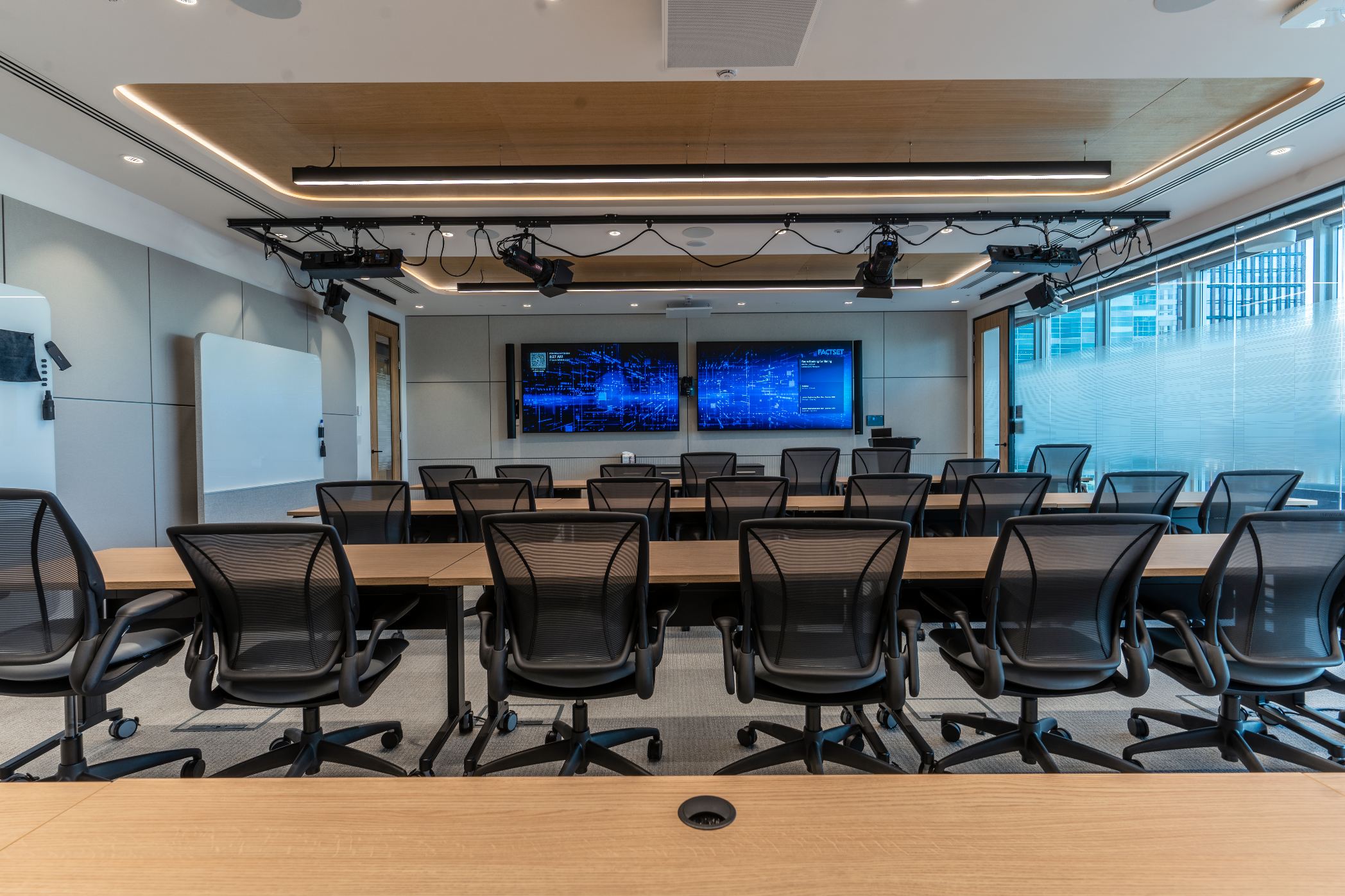
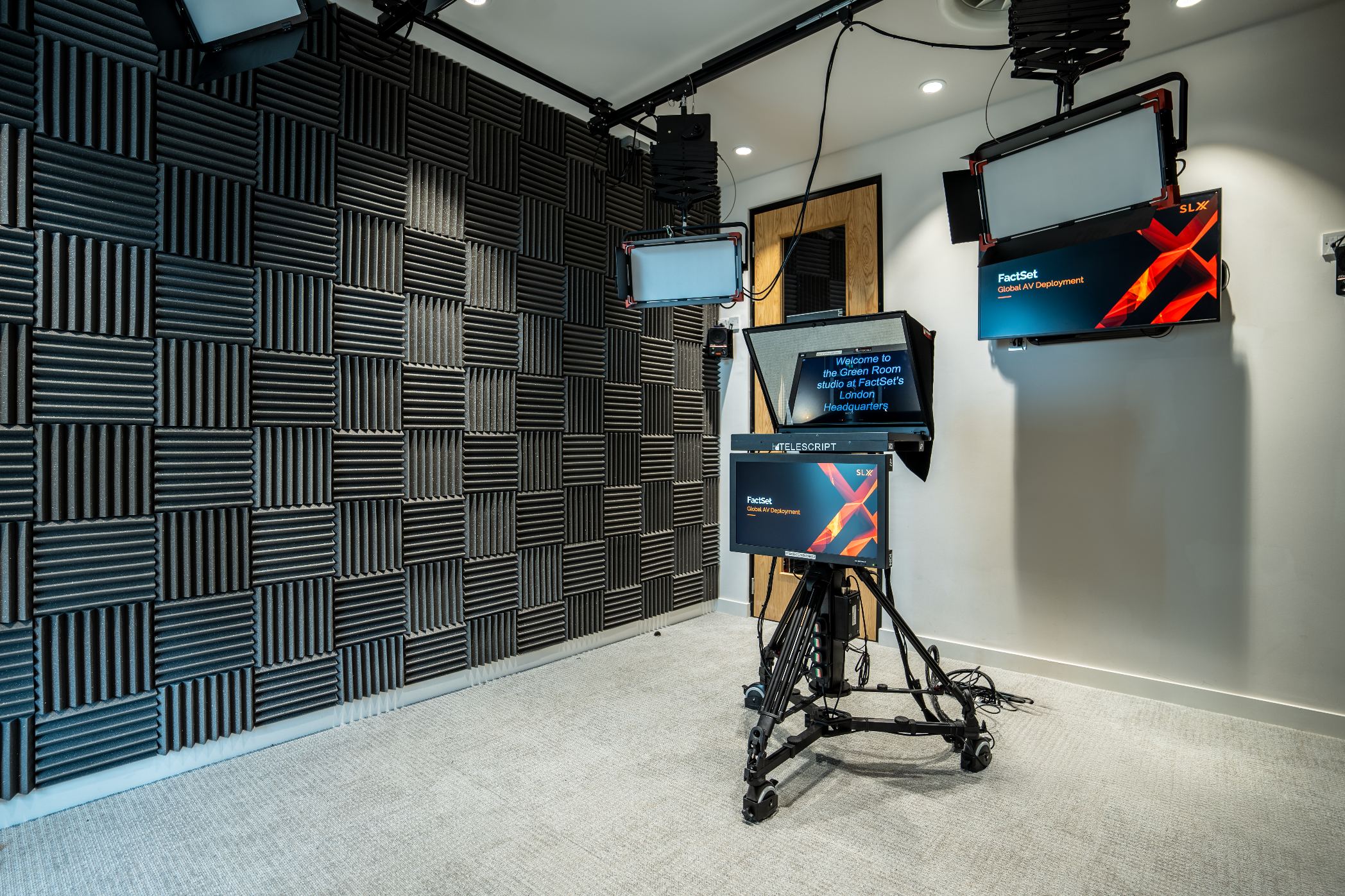
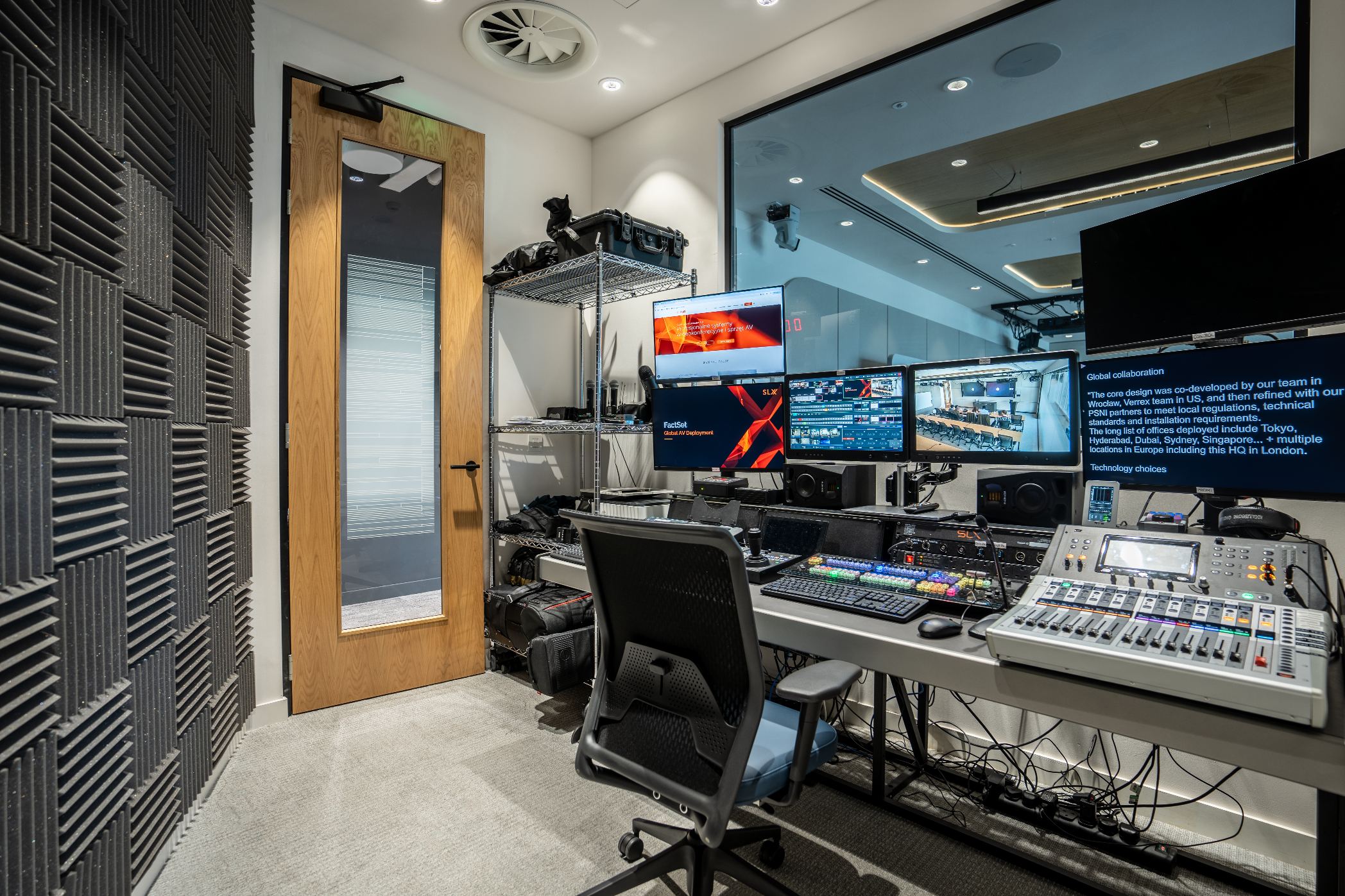
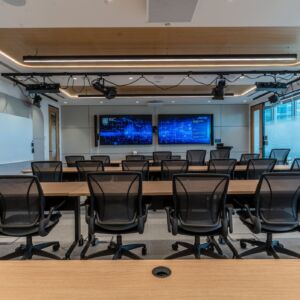
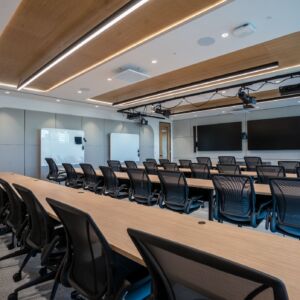
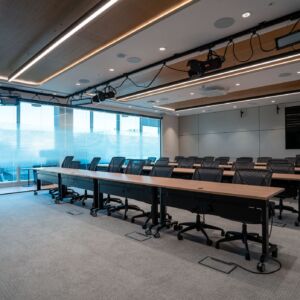
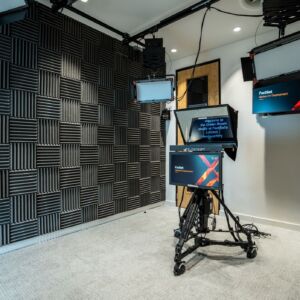
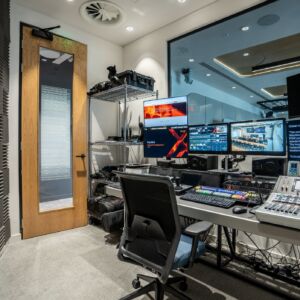
The boardroom was designed to accommodate meetings of particular importance to the organisation. The training room, together with its control room, enables training sessions and presentations for larger groups, including in a hybrid format. In addition, the implemented corporate broadcast solutions enable hybrid training sessions to be conducted simultaneously across three continents, as well as control of AV systems – including cameras, lighting and displayed content in each room – from any of the three control rooms in London, Norwalk and Manila.
The studio with its green room, meanwhile, enables video content production and professional internal and external communications. As a result, the AV environment supports not only everyday collaboration, but also skills development, knowledge sharing and content creation.
Technology Aligned with the Standard
In this project, technology was a means of achieving a specific objective, rather than an end in itself. We selected every component with its intended function and the consistency of the entire environment in mind. The key priorities were reliability, high-quality video and audio, ease of use and compliance with the FactSet standard.
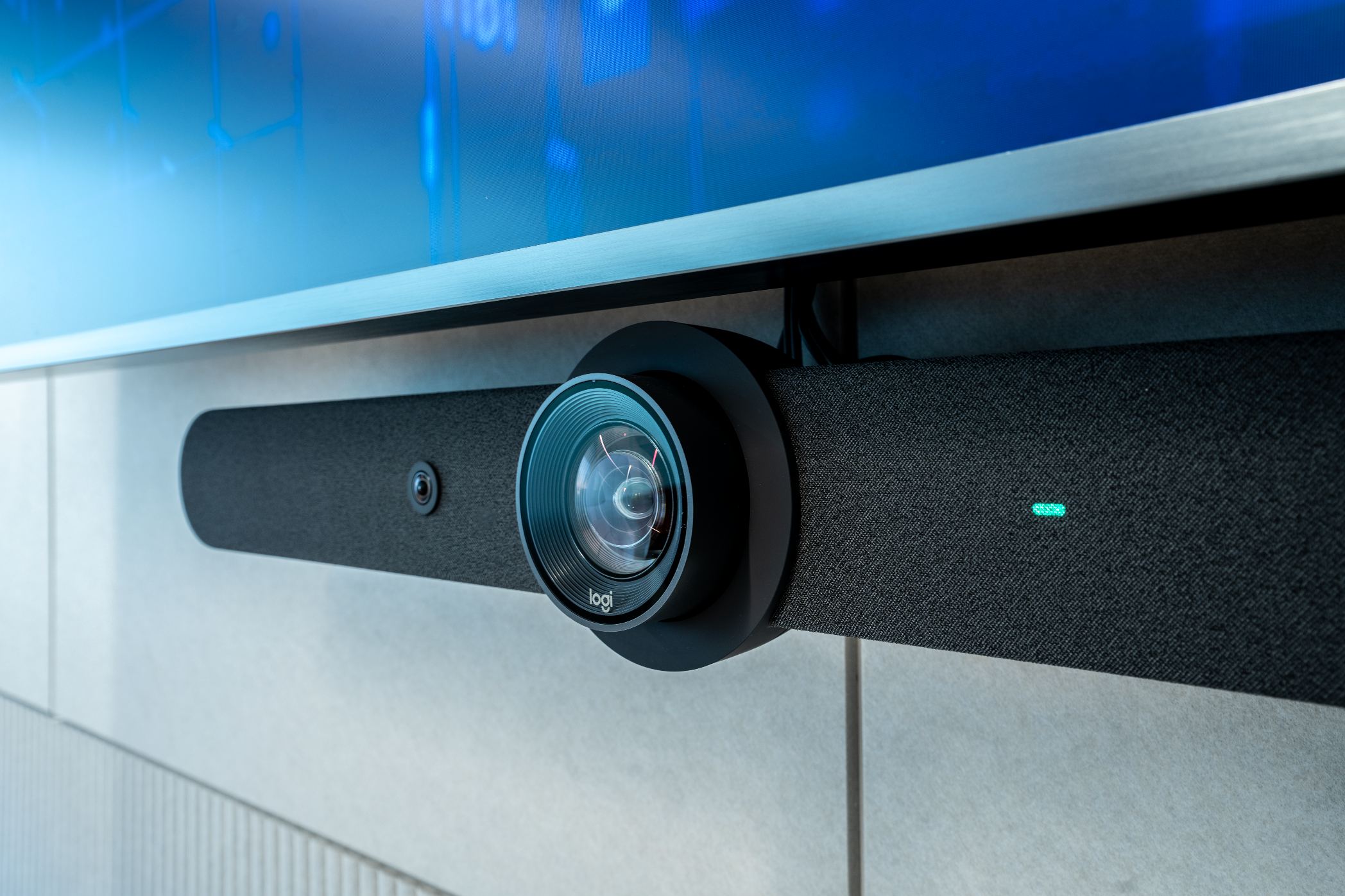
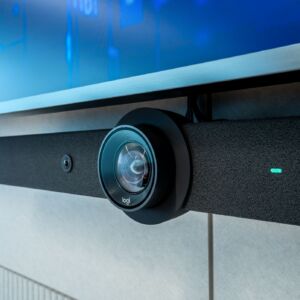
We used solutions from manufacturers including Logitech, Crestron, Samsung, Q-SYS, Netgear, Shure, JBL, Canon, Sony, Blackmagic Design, Atlas IED, WattBox and SWIT. We integrated them into a single ecosystem that can be efficiently managed, expanded and deployed in subsequent offices.
One Scalable AV Ecosystem
Delivering projects across 19 countries does not mean having to design the AV environment from scratch 19 times. Instead, these are successive implementations of a single environment that can evolve alongside FactSet.
Employees using an office in another country do not have to learn how to operate the meeting rooms from scratch, while international teams can conduct meetings and collaborate remotely more easily.
From FactSet’s perspective, this also means greater predictability for future deployments. New offices can benefit from the established model rather than having to design their AV environment from the ground up each time.
However, this is not a rigid template replicated regardless of local conditions. Each deployment can be adapted to the spatial layout, local infrastructure and team requirements while maintaining the common operating logic of the entire system.
FactSet continues to grow. Further deployments are in preparation, including a new office in Singapore and additional locations.
Are you planning to establish a global AV standard or deploy consistent solutions across multiple locations? Let’s discuss a model that combines centrally defined principles with the needs of local teams.
Project Gallery



Project Team